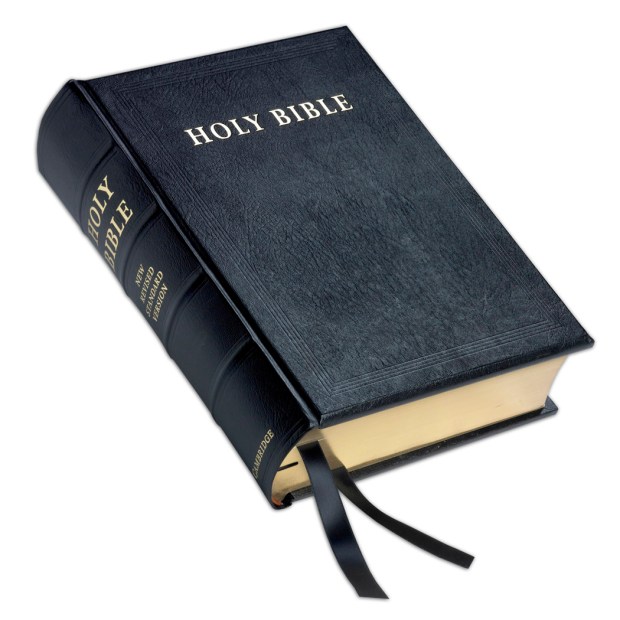
Rediscover the Word


Bible

From the very beginning God’s people were people of the Word.

And God said, “Let there be light,” and there was light.

Genesis 1:1

In the beginning was the Word, and the Word was with God, and the Word was God.

John 1:1

The shifty serpent coaxed God’s creation to question His word. But even then, God’s people held on to His new words promising not to abandon them but to work through his now-fallen people to crush this serpent and restore God’s creational intent. Thus God’s Word gave birth to God’s story.

As God’s story unfolded and grew, so did the words. And God’s people passed the story from generation to generation. God gave his people two handwritten tablets of His covenant to keep in a special place. Records started being kept. Those who could write begin to write down the words. Songs turned into songbooks. Stories evolved into storybooks. The people heard it, knew it, and lived by it. The people of God were a people of the Word.

But over time, successive generations began to lay the Word aside. They commenced to living their own narrative instead of God’s until eventually a decisive turning point caused the people to question the entire story. God allowed them to be conquered, their temple was burned, and they were exiled to live in a foreign country.

But as it turns out, this very catastrophe is what caused the people to rediscover the Word of God. When they were eventually allowed to return to their homeland, they rebuilt the temple and the wall around their great city. But they did something else. The leaders stood on a platform and read out loud from the Word once again. The people began to weep and express their remorse and the Word of God was rediscovered.

…he read from [the Book of the Law]…from early morning until midday, in the presence of the men and the women and those who could understand. And the ears of all the people were attentive to the Book of the  Law. And they bowed their heads and worshiped the Lord with their faces to the ground…and there was great rejoicing.

Nehemiah 8:3-18

This is precisely why we feel led to “Read Through the Bible” at Aldersgate Church. Beginning this Sunday, we will stand in our worship space and read the Word out loud – from Genesis to Revelation – over five uninterrupted days. May God help us rediscover His Word just as his people did in Nehemiah!

Lent is More Than Belly Button Silt

Lent

In last week’s blog, I confessed that most of my life I didn’t know what Ash Wednesday was all about. I thought it was a day to make amends for all the partying that happened the day before on Fat Tuesday. This week I’ll come clean about not knowing much about Lent either. If we weren’t talking about the stuff that accumulates in your belly button, all I knew was that it was a time you had to give up something really good and could only eat fish on Friday’s. I had no clue Lent was an important part of the liturgical church calendar.

I did not grow up in a church that followed a liturgical calendar. We celebrated Easter and Christmas, but terms like Advent and Lent were lost on me. Recently, however, I’ve come to appreciate not only what these days and terms mean, but the value of participating in them.

The church calendar is a yearly cycle that corresponds to the life of Jesus from His birth to His resurrection, and then to the outpouring of the Holy Spirit at Pentecost. It involves major holy days (Christmas, Easter, Pentecost) and seasons (Advent, Lent, Holy Week), and includes a few other significant days (Epiphany, Ash Wednesday, Good Friday, and Trinity Sunday) within these seasons.

The liturgical year begins with Advent,which starts four weeks prior to Christmas. Advent is a season of expectation. As the saints of old awaited the coming of a Redeemer, we, like them, await Jesus’s return. Following Advent is the season of Christmas. According to tradition, Christmas is a 12 day celebration that begins December 25th and ends January 5th (hence the song, “Twelve Days of Christmas”). Punctuating the Christmas season is Epiphany. On this day, the church traditionally remembers the coming of the Wise Men to worship Jesus. Ash Wednesdayis a day on the church calendar that marks the beginning of the season of Lent. Lent, which begins 46 days (40 weekdays plus 6 Sundays) before Easter is a season of fasting and preparation. It is intended to mimic the 40 days that Jesus spent in the wilderness being tested. The last seven days of Lent are called Holy Week, which recall the last days of Jesus on Earth before His crucifixion. During these six days we remember Jesus’s death for us and its significance on Good Friday. Holy Week culminates with Easterwhen we celebrate the resurrection of Jesus from the dead. Fifty days after Easter is Pentecost, a day in which the church recounts the outpouring of the Holy Spirit recorded in Acts 2.

So, we are currently in the season of Lent. It’s a time we focus on our relationship with God often choosing to deny ourselves of something that interferes with that relationship and/or to get beyond ourselves and give to others. However you are observing Lent I pray it is a meaningful season for you

What is This Ash Thing All About?

Ash Wednesday

For the first half of my life, I literally had no clue about Ash Wednesday. I had no exposure to it. All I knew about the day is that I would randomly see people with a cross of ashes marked on their forehead. Honestly, I thought Ash Wednesday was something Catholics did to repent of all the partying they did the day before on Fat Tuesday. It was a means of cheap grace, a way to make amends and be absolved for the previous day’s deliberate debauchery.

I gradually discerned that those caricatures weren’t all that accurate. It has only been in the past few years, however, that I’ve gained a clearer understanding and appreciation for Ash Wednesday. In fact, it has become a day that I’ve embraced and invite you to participate in.

Ash Wednesday is a day on the church calendar that marks the beginning of the season of Lent (in part two of this blog, which I will post next week, I will explain Lent for those of you, like me, who grew up with no understanding of it either.) Ash Wednesday is a day set aside by Christians to remind us of our sinfulness –how we fall short of the glory of God (Romans 3:23). Sounds exciting, huh?

The truth is we need Ash Wednesday. We need to set aside time to look our inadequacy square in the eyes.  The bad news of our sinfulness prepares us to receive the good news of forgiveness found in Jesus Christ. The despair of death drives us to look toward Easter, when our Lord conquered the grave.

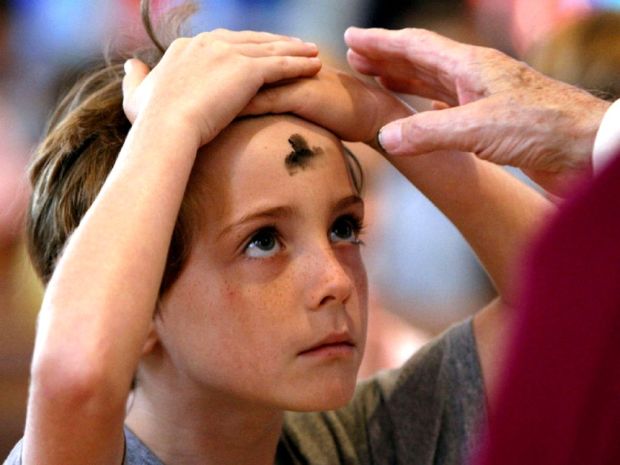
So today is Ash Wednesday, and Aldersgate, like many others, is hosting an Ash Wednesday service. We will gather from 7:00-8:00 p.m. to spend time reflecting on those places we fall short and ask God to have mercy. For those who wish to participate, we will impose ashes, smearing a small cross on foreheads as a physical, felt, and visible mark of repentance. And we will receive communion – symbols of bread and juice representing Jesus’ body and blood – that remind us of our forgiveness.

I realize that for some of you, this will be a new practice. It might seem strange or cause you to feel uncomfortable. You’ll be glad to know participating in Ash Wednesday is not a biblical requirement. You are no more or less Christian or holy if you take part or not. But I urge you to prayerfully consider coming or finding a place of worship that practices Ash Wednesday. I don’t think you’ll be disappointed.